
From Flawed to Finding Flow
The Four Stages of Getting Good at This Whole Dog Thing

There’s this framework about learning skills that I think about constantly when it comes to living with dogs. It’s called the four stages of competence, and honestly, it’s the perfect lens for understanding why dog training feels so hard sometimes—and why it eventually gets easier.
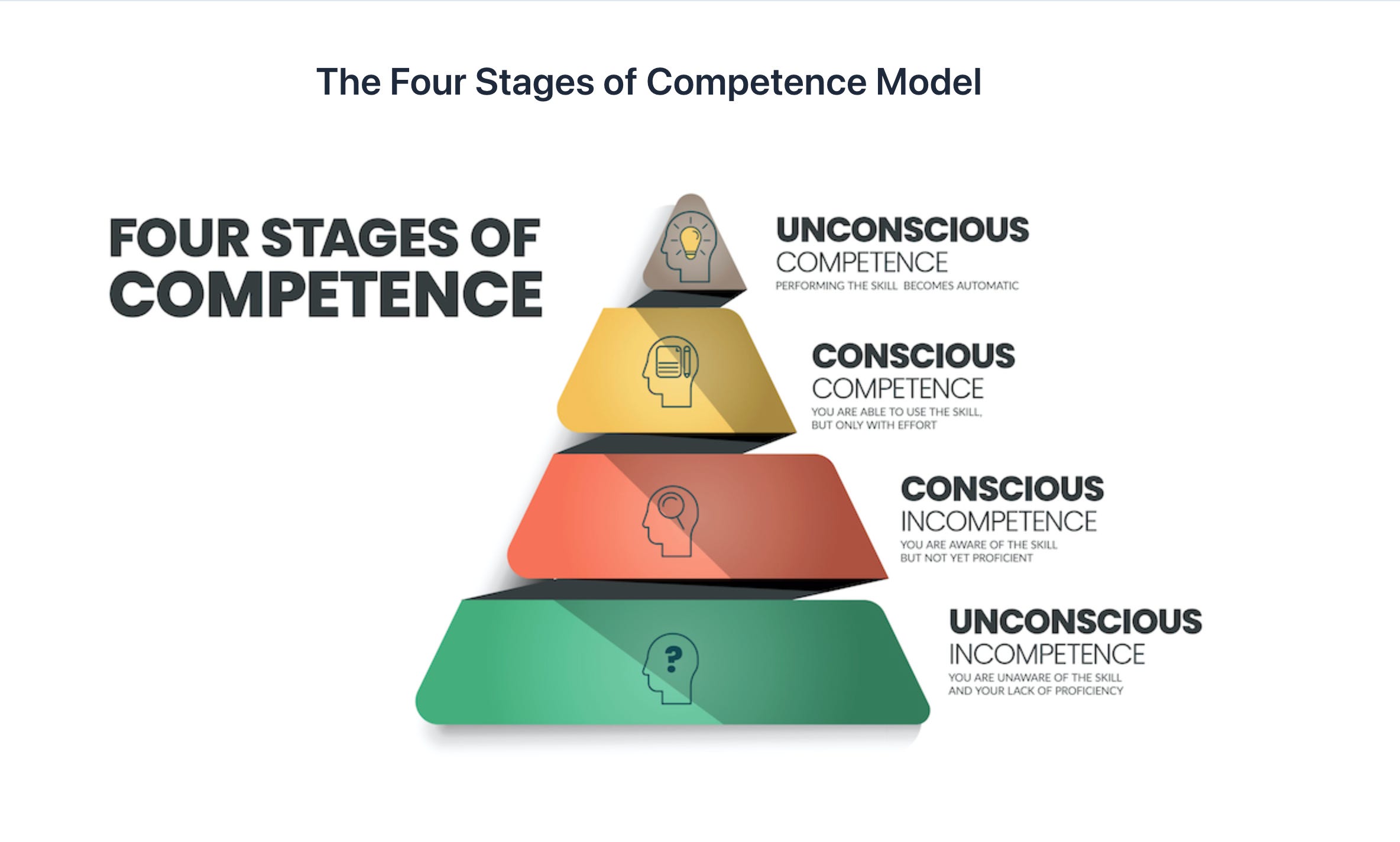
Stage One: Unconscious Incompetence (You Don’t Know What You Don’t Know)
This is where most people start. You bring home a dog, and you think: food, water, shelter, maybe a walk or two. Done, right? Your dog has a backyard. You bought them a bed from Amazon. They’re fine.
But here’s the thing—you don’t even realize what you’re missing yet. You don’t know that your dog’s constant barking at the window is actually anxiety. You don’t know that letting them drag you down the street isn’t just “being strong,” it’s a symptom of no one ever teaching them what a leash is for. You don’t know because our culture has accepted a pretty low bar for what it means to care for a dog well.
This isn’t about blame. It’s just where we start. We’re all products of what we’ve seen and been told.

Stage Two: Conscious Incompetence (Oh. Oh No.)
Then something shifts. You read an article. You watch a video. Someone gently points out that maybe your dog is stressed, not stubborn. And suddenly, you see it. You become aware of all the things you’ve been doing wrong—or more accurately, all the things you simply never learned to do right.
This stage can feel pretty humbling. You might cringe thinking about the past few months or years. But here’s what I want you to know: this awareness is actually a gift. You can forgive yourself for what you didn’t know. Self-deprecation isn’t required here, just honesty.
This is the stage where most of the people who reach out to me find themselves. They’re stuck in a reactive loop. The dog is pulling, jumping, barking, whatever—and they’re responding in ways that aren’t working, but they don’t know what else to do.
Stage Three: Conscious Competence (You’re Learning, But It Takes Effort)
Here’s where the work happens. You take a class. You hire someone. You read a book. You start learning actual skills—how dogs learn, how to communicate clearly, how to set your dog up for success instead of just hoping they figure it out.
But it’s hard. Every interaction requires thought. You have to remind yourself: wait for the sit before opening the door, mark the behavior the instant it happens, don’t repeat the cue five times. It’s exhausting because you’re overriding old habits and building new ones.
This is where “fake it till you make it” fails you. You can’t confidence your way through this stage. You need competence. And competence takes practice, repetition, and patience—with yourself and your dog.
Here’s the deal we’ve struck with dogs: we’ll learn about them, and they’ll learn about us. And trust me, your dog is already an expert on you. They know when you’re reaching for the leash versus your purse. They know the sound of the treat bag from three rooms away. They’re furry little anthropologists studying you every single day.
So the question is: what do you know about them? Do you understand how they learn? Do you know how to test if they’ve actually retained what you taught them? These are the competencies that make everything easier.
Stage Four: Unconscious Competence (Finally, It Flows)
This is where the magic happens. The skills you’ve been practicing become habits. You don’t have to think about your timing anymore—it’s just automatic. You read your dog’s body language without conscious effort. You redirect before the problem even starts because you’ve done it so many times it’s second nature.
I think about learning to drive a manual transmission when I was sixteen. It seemed impossible at first—all four limbs doing different things at different times. I actually failed my driver’s test. But eventually, I bought a stick shift Jeep and drove it for years, taking road trips, commuting to work. Sometimes I’d arrive home and realize I couldn’t even remember the drive because it had become so automatic. That’s unconscious competence.
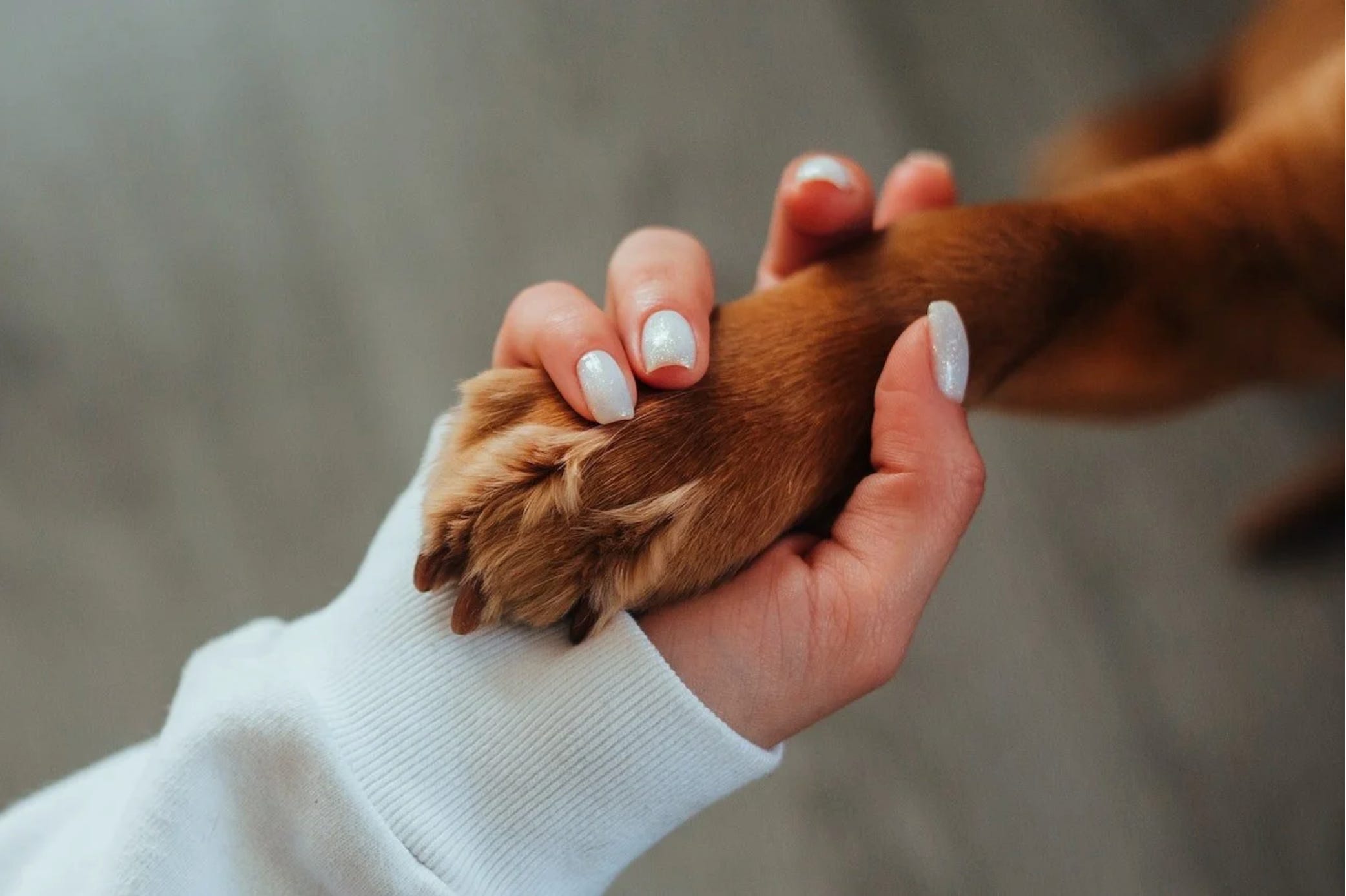
This is where dog training becomes relationship. Where it stops feeling like work and starts feeling like partnership
.
The Path Forward
Most people get stuck between stages two and three. They know something’s wrong, but they don’t know how to fix it, and the effort required to learn feels overwhelming.
But here’s what keeps me going in this work: both you and your dog can level up together. You don’t have to be perfect. You just have to be willing to learn.
Start with one thing. Maybe it’s teaching a solid recall. Maybe it’s learning to read your dog’s stress signals. Maybe it’s just consistently rewarding the behavior you want instead of only punishing what you don’t.
The competence will come. And with it, the confidence. And eventually—if you stick with it—the ease.
Your dog is already studying you. Maybe it’s time to study them back.
Need help building your plan and learning the competencies to move through these stages? Paid members get a free 30-minute consultation to help you figure out exactly where you are and what skills you need to focus on next. Sometimes having someone map out the path forward makes all the difference.
This is SO ENCOURAGING! Things are getting better. I’ve discovered so many good things about my Lola lately. My patience and awareness of her…both growing. Thank you!